30 Years of Vision: How ECO Trails Helped Build the Eagle Valley Trail
This March marks 30 years since the first meeting of the ECO Trails Committee. Formed in 1996 after voters approved a half-percent sales tax for transit and trails, the committee helped turn a simple funding idea into what is now a nearly complete, 63-mile paved trail linking Vail Pass to Glenwood Canyon.
Today, about 90 percent of the Eagle Valley Trail is built and funded. It is hard to imagine the valley without it. But three decades ago, there was no regional trail plan and no connected system. Just a commitment to try.
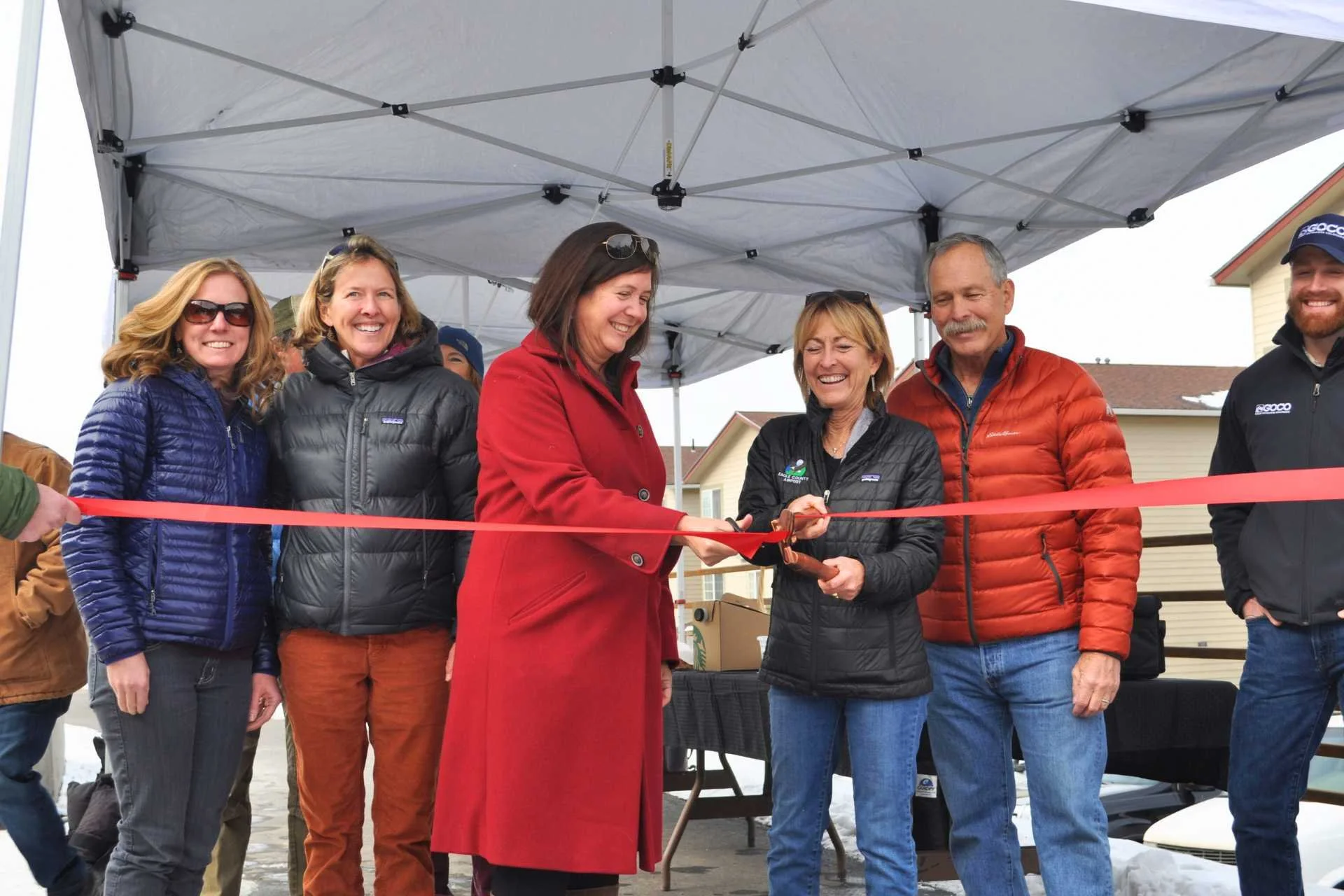
Dedicating a completed section of the EVT at a 2016 ribbon cutting.
From Idea to Asphalt
In the early years, ECO Trails brought towns, Eagle County, and partners together to create a shared plan. Construction followed in phases through the early 2000s, connecting Dowd Junction to Edwards and Eagle to Gypsum and Dotsero. Progress was steady, though never easy.
“The biggest challenge is always money,” says longtime member Dick Cleveland, who has served on the ECO Trails committee since the beginning.
Creative partnerships with Eagle County and successful grant applications kept the project moving. When obstacles arose, the committee adapted. A great example is the EagleVail segment, where years of stalled negotiations with businesses and landowners led to a fresh approach. ECO Trails partnered with Colorado State University students to create a new, revised alignment that was more affordable and achievable, and it got built.

Celebrating the $7 million GOCO Centennial Program grant in 2024.
Game-Changing Momentum
Momentum grew in 2016 and 2017 when key trail segments were recognized in then Governor Hickenlooper’s Colorado the Beautiful program. A $2 million Great Outdoors Colorado (GOCO) Connect Initiative grant helped advance the Eagle to Horn Ranch segment. The Eagle County Commissioners then committed $22 million through Certificates of Participation, a major local investment in finishing the trail. Since that time, municipalities and metro districts have also stepped up with significant funding contributions, reinforcing the valley-wide commitment to completion.
More support followed, including $5 million in federal grants in 2022 and a $7 million GOCO Centennial Program grant in 2024 for the final and most complex stretch from Horn Ranch to Edwards.
A feasibility study and fundraising campaign launched alongside that work, with a goal of raising $38 million. About $40 million has been secured so far through County support, municipalities, metro districts, GOCO, foundations, federal funding, and generous donors. With rising costs and challenging terrain ahead, continued support will help keep the Eagle Valley Trail on track to completion.
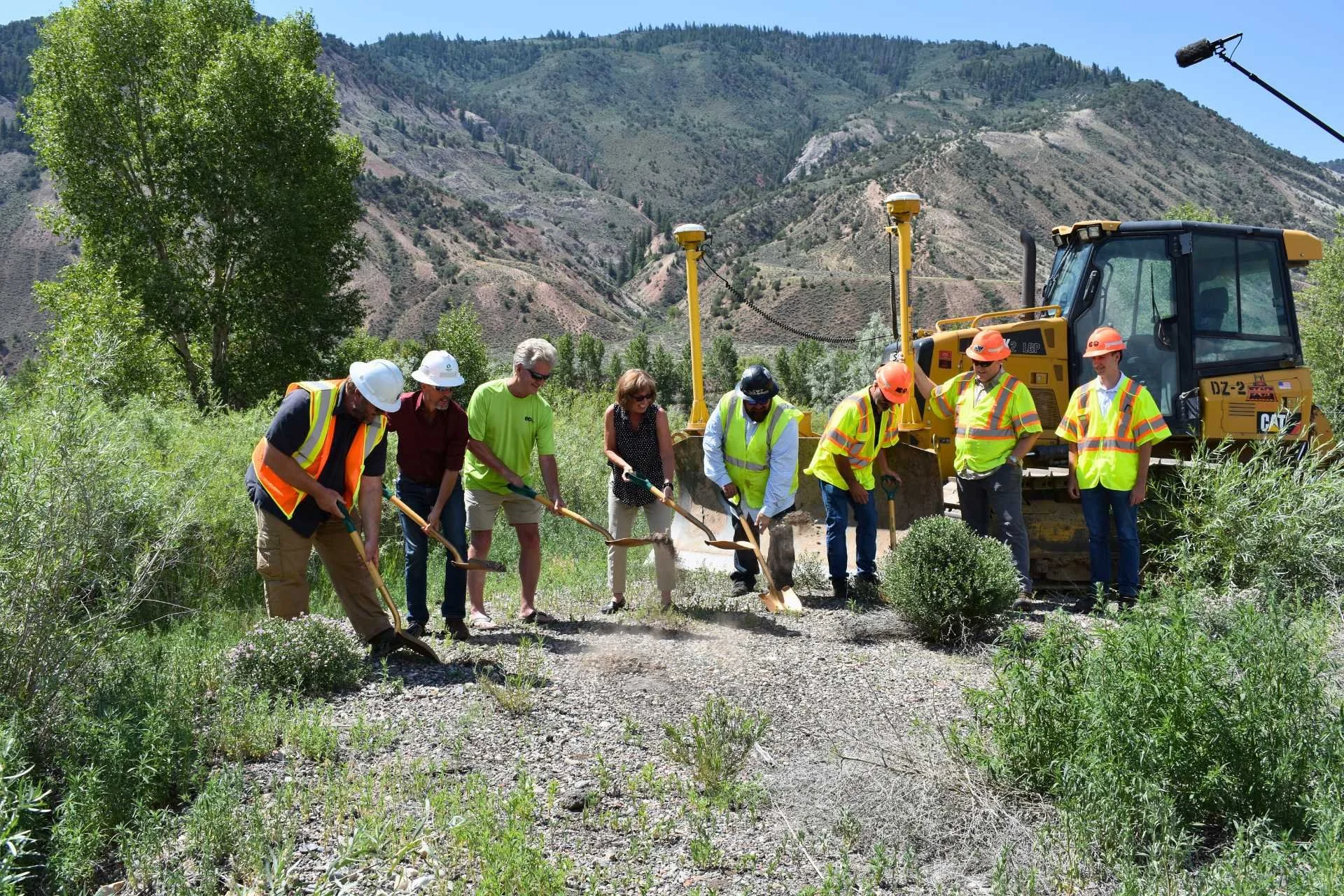
Groundbreaking for the Duck Pond to Dotsero segment of the EVT.
Built by Community
For 30 years, collaboration has been the constant. Towns, agencies, volunteers, and leaders worked together, often quietly, to make steady progress.
“These things don’t just happen,” Cleveland says. “They get done because people put in the time and effort.”
What began as a ballot measure has become one of the valley’s most meaningful assets, connecting communities and expanding access to the outdoors for generations to come.
As we celebrate this ECO Trails milestone, we invite you to help finish the job they started. Donate today to support completing the Eagle Valley Trail.